
When a filtration process involves aggressive chemicals, organic solvents, airborne particles or demanding sampling conditions, the membrane must do more than simply retain particles. It must remain stable, resist chemical attack and provide dependable performance throughout the filtration cycle.
Macrokun Mesh supplies PTFE membrane filters, 1.0 µm, 82.6 mm for laboratory, environmental and industrial filtration applications. These precision-cut membrane discs combine a nominal 1.0-micron pore size with an 82.6 mm diameter, making them suitable for compatible filter holders, sampling equipment and analytical filtration assemblies.
Manufactured from polytetrafluoroethylene, commonly abbreviated as PTFE, the membrane offers broad chemical resistance and an inherently hydrophobic surface. This combination makes it especially useful for air and gas filtration, aerosol collection, solvent filtration, venting and processes where conventional hydrophilic membrane materials may be unsuitable.
Macrokun Mesh supports standard orders, wholesale purchasing and customized production for laboratories, distributors, equipment manufacturers and industrial filtration companies.
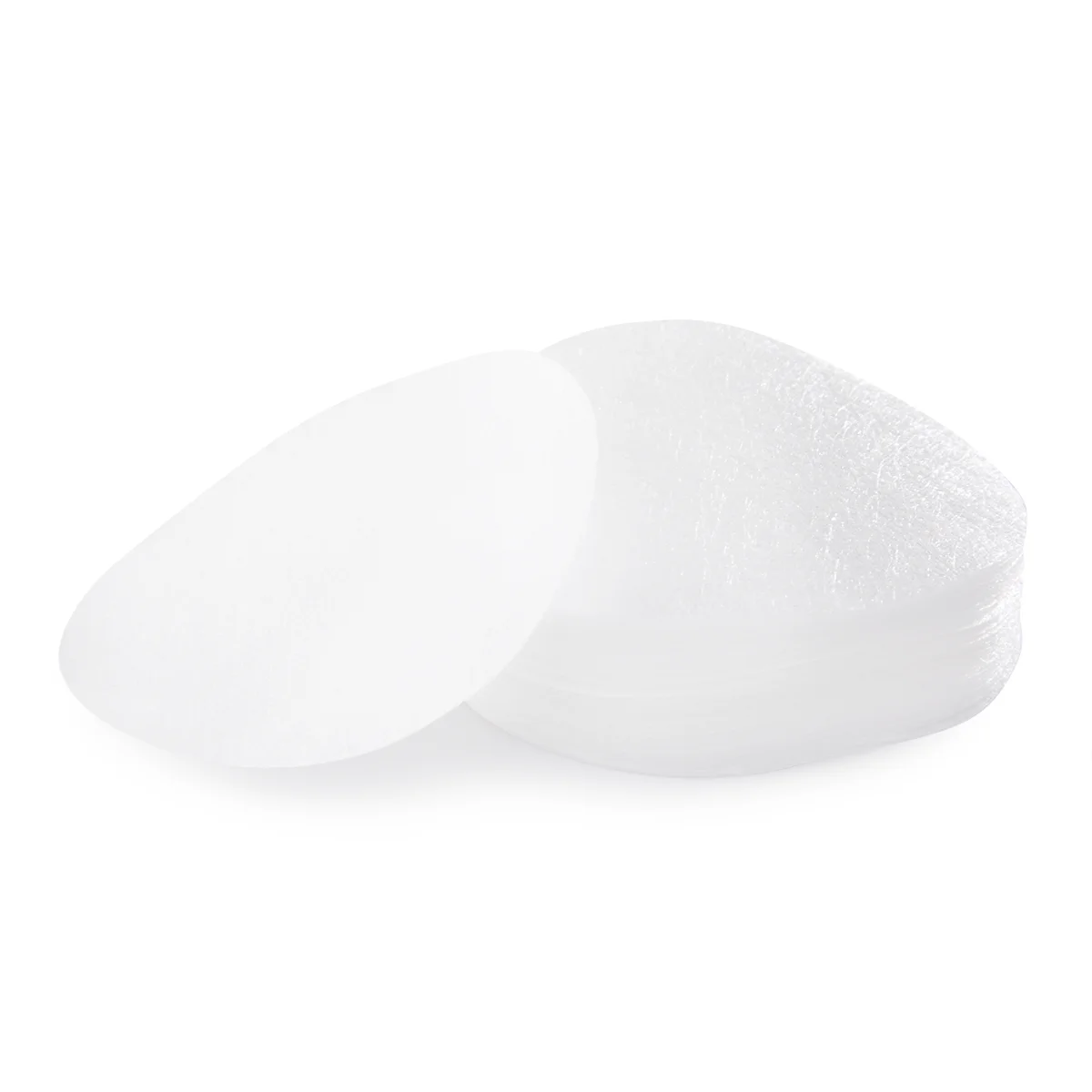
The PTFE membrane filter 1.0 micron 82.6 mm is supplied as a circular filter disc. Its defined diameter allows convenient installation in compatible holders without the need for manual cutting, while the 1.0 µm pore rating provides a practical balance between particle retention and filtration throughput.
| Parameter | Standard Description |
|---|---|
| Product | PTFE membrane filter disc |
| Membrane material | Polytetrafluoroethylene |
| Nominal pore size | 1.0 µm |
| Disc diameter | 82.6 mm |
| Surface property | Naturally hydrophobic |
| Shape | Round disc |
| Color | Typically white |
| Sterility | Nonsterile as standard; discuss special requirements |
| Packaging | Configurable according to order requirements |
| Support layer | Unsupported or supported options subject to confirmation |
| Customization | Pore size, diameter, packaging and private label |
| Supplier | Macrokun Mesh |
| Order type | Sample, wholesale, OEM and custom orders |
The final specification should always be selected according to the liquid or gas being filtered, operating temperature, differential pressure, holder design and analytical method.
Pore size directly affects particle retention, pressure drop and filtration speed. A smaller pore size may retain finer particles but usually creates greater flow resistance. A larger pore size can improve throughput but may allow smaller particles to pass.
A 1.0 µm PTFE membrane filter is often selected when the filtration objective is to collect or remove micron-scale particles without creating the higher resistance associated with very fine membranes such as 0.2 µm or 0.45 µm filters.
This pore rating can be useful for:
The correct membrane should not be chosen by pore size alone. Buyers should also consider chemical compatibility, membrane construction, effective filtration area, operating pressure and whether the process involves aqueous or nonaqueous media.
The 82.6 mm PTFE membrane filter is a specialized format used in certain laboratory holders, environmental sampling systems and industrial filter assemblies. Buying a correctly cut disc provides several advantages over cutting membrane material manually.
A controlled outside diameter helps the membrane sit correctly inside a compatible holder. This can reduce the risk of edge folding, incomplete sealing or bypass around the membrane.
Pre-cut discs reduce unnecessary handling and eliminate the need to cut membrane sheets in the laboratory or production area. This is particularly useful when controlling contamination is important.
Operators can place the membrane directly into a compatible holder, reducing preparation time during repetitive testing or routine monitoring.
Consistent disc dimensions help maintain a repeatable effective filtration area from one test or production batch to another.
Before ordering, verify that the actual membrane seat and sealing arrangement in your holder are designed for an 82.6 mm disc. The nominal filter diameter and the holder’s effective filtration diameter may not be identical.
PTFE is widely selected for filtration involving aggressive chemicals and organic solvents. Its chemical stability makes it an effective alternative when cellulose-based or other polymeric membranes may swell, soften or become damaged.
Compatibility should still be evaluated under the actual operating conditions. Chemical concentration, temperature, exposure time and mechanical stress can all influence performance.
Standard PTFE membranes repel water and allow air or gas to pass without readily wetting with an aqueous solution. This makes hydrophobic PTFE suitable for gas filtration, venting and moisture-barrier applications.
For aqueous liquid filtration, the membrane normally requires pre-wetting with a compatible low-surface-tension liquid unless a hydrophilic PTFE grade is specifically ordered.
The porous PTFE structure can capture particles while permitting airflow. It is therefore frequently considered for air sampling, aerosol collection, equipment vents and gas-stream filtration.
PTFE has a low-energy surface, which can help reduce unwanted adhesion in certain filtration processes. Actual recovery and adsorption behavior depend on the sample, target compound and complete test method.
PTFE performs across a broader temperature range than many common polymer membrane materials. However, the safe operating temperature of a finished filter depends not only on the PTFE itself but also on any support layer, sealing component, holder and process conditions.
The 82.6 mm circular format is convenient for direct placement in compatible holders. Macrokun Mesh can also discuss other diameters for equipment manufacturers and replacement-filter suppliers.
Understanding the difference between hydrophobic and hydrophilic PTFE is essential before ordering.
Standard PTFE membrane is naturally hydrophobic. It is generally preferred for:
Water does not readily penetrate a dry hydrophobic membrane under normal low-pressure conditions. This property allows the membrane to act as both a particle barrier and a moisture barrier in many gas applications.
Hydrophilic PTFE has been modified so that water can wet and pass through the membrane more readily. It can be considered for:
A buyer should not assume that every PTFE membrane is hydrophilic. Unless otherwise specified, PTFE membrane is normally hydrophobic.
PTFE membrane discs can be used to collect suspended particles from an air stream for subsequent gravimetric or instrumental analysis. Their chemical stability is useful when samples may later be extracted or analyzed using solvents.
The correct filter must be selected according to the sampling instrument and analytical protocol. Diameter, pore size, membrane mass, support construction and background characteristics may all affect method suitability.
A 1.0 µm membrane provides a useful combination of airflow and particulate collection for selected aerosol-monitoring setups. It may be used in research, workplace monitoring and industrial-process observation when compatible with the applicable procedure.
Hydrophobic PTFE is commonly considered for filtering chemically aggressive or nonaqueous solvents. Applications may include sample cleanup, reagent clarification and protection of downstream analytical equipment.
Before use, test the membrane with the exact solvent mixture. Additives, elevated temperatures and long contact times may change the practical compatibility requirement.
PTFE membrane can allow gas exchange while helping prevent particle and liquid-water entry. Potential uses include:
The membrane must be installed with a suitable seal to prevent unfiltered gas from bypassing the disc.
The filter may support sample clarification before analysis, especially for nonaqueous samples. Selecting the correct membrane can help protect analytical instruments from suspended particles and reduce contamination of downstream components.
Production facilities can use membrane filters to collect samples from air, gas or compatible liquid streams. The collected particles can then be inspected to evaluate contamination, equipment condition or process cleanliness.
Macrokun Mesh can supply PTFE membrane discs to equipment manufacturers that incorporate replaceable media into holders, vents, samplers or custom filtration devices.
Different membrane materials solve different filtration problems. The most appropriate choice depends on the sample and intended analysis.
| Membrane material | Typical surface | Common strengths | Common considerations |
| PTFE | Hydrophobic | Broad chemical resistance, solvents, air and gas filtration | Dry standard PTFE is not readily wetted by water |
| Hydrophilic PTFE | Hydrophilic | Chemical resistance with easier aqueous filtration | Confirm modification and compatibility |
| Nylon | Hydrophilic | Good strength and general laboratory filtration | May bind some proteins or analytes |
| PES | Hydrophilic | High flow and often used for aqueous or biological samples | Solvent compatibility must be checked |
| PVDF | Hydrophobic or hydrophilic | Useful in biological and chemical filtration | Grade-specific adsorption and compatibility |
| MCE | Hydrophilic | Common in microbiology and particle analysis | More limited resistance to aggressive solvents |
| Polypropylene | Hydrophobic | General chemical resistance and prefiltration | Pore structure and analytical suitability vary |
PTFE is usually the stronger candidate when chemical resistance, solvent handling or gas filtration is the primary requirement. For water-based samples, a hydrophilic membrane may offer easier operation.
The exact procedure depends on the filter holder and test method, but the following general steps apply to many installations.
For aqueous filtration with hydrophobic PTFE, a compatible pre-wetting procedure may be required. Do not introduce a wetting agent unless it is acceptable for the sample and analysis.
A precise product description helps prevent specification errors. Provide the following information when requesting a quotation:
For the keyword specification discussed here, the basic inquiry format is:
PTFE membrane filter, hydrophobic, 1.0 µm pore size, 82.6 mm diameter, round disc, nonsterile, required quantity and packaging stated by the buyer.
Membrane quality cannot be evaluated only by appearance. Buyers should review the characteristics that directly affect filtration.
Disc diameter should remain within an agreed tolerance to support reliable installation and sealing.
The supplier should control the membrane structure so different production batches provide consistent filtration behavior.
Membranes should be handled and packaged in a controlled manner appropriate to the intended application.
Packaging should protect filter discs from dust, deformation and moisture during storage and transportation.
Where required, labels and batch records should allow the product to be traced to the relevant production lot.
The final buyer should qualify the membrane in the actual filtration system. Flow, pressure, retention, extractables and analytical background should be assessed when these factors are critical.
Macrokun Mesh supplies filtration mesh, membrane media and converted filter components for industrial and laboratory customers. Our objective is not simply to provide a membrane disc, but to help buyers select a specification that fits their filtration equipment and working conditions.
Working with a production-oriented supplier makes it easier to discuss dimensions, tolerances, packaging and repeat orders.
In addition to PTFE membrane filters, 1.0 µm, 82.6 mm, customers can inquire about other membrane diameters and pore sizes for different holders and assemblies.
Packaging, labels and product identification can be discussed for distributors, filtration brands and equipment manufacturers.
We support product evaluation, trial orders and bulk purchasing according to project requirements.
Membrane filters can be packed to reduce contamination, edge damage and deformation during international transportation.
Buyers can provide a current part number, drawing, holder dimensions or sample so our team can evaluate an appropriate replacement or custom format.
Macrokun Mesh can discuss custom production for projects requiring specifications beyond the standard 1.0 µm and 82.6 mm combination.
Available options may include:
Custom feasibility depends on the membrane type, dimensions, quantity and quality requirements.
Store PTFE membrane filters in their original packaging in a clean, dry indoor environment. Protect them from dust, direct sunlight, strong mechanical pressure and unnecessary handling.
Do not crease or fold the discs. A damaged edge or punctured filtration area can cause leakage and invalidate a filtration result.
Operators should use clean, smooth-tip forceps. Where gravimetric or trace analysis is involved, follow the conditioning and handling procedures required by the relevant method.
A PTFE membrane filter is a porous filtration medium manufactured from polytetrafluoroethylene. It is valued for chemical resistance, hydrophobicity and suitability for many air, gas and solvent-filtration applications.
The 1.0 µm specification refers to the membrane’s nominal pore rating. It helps describe the filter’s intended particle-retention range but should not automatically be interpreted as an absolute cutoff unless the product is specifically validated that way.
It is the outside diameter of the circular membrane disc. The filter should be used with a holder designed for that disc size.
Standard PTFE membrane is naturally hydrophobic. Confirm the surface treatment when ordering because hydrophilic PTFE versions are also available for certain applications.
A dry hydrophobic PTFE membrane does not wet easily with water. It may require pre-wetting with a compatible liquid, or the user may select a hydrophilic PTFE membrane for aqueous filtration.
PTFE is commonly used for many organic solvents because of its broad chemical resistance. Compatibility should still be confirmed for the exact chemical mixture, temperature and contact time.
Nonsterile filters are commonly supplied for general laboratory and industrial use. Contact Macrokun Mesh if sterile packaging or a specific sterilization requirement is needed.
Membrane filter discs are generally treated as single-use consumables, particularly in analytical work where retained contamination can affect results. Reuse is not recommended unless the process has been specifically validated for it.
Packaging quantities can be discussed according to the order. Buyers should specify whether they require 50 pieces per pack, individual packaging or another bulk format.
Yes. Customers can inquire about common or customized disc diameters according to their filter holder or equipment design.
Macrokun Mesh can evaluate the requested pore size, diameter, material and construction. Provide the existing product specification, technical drawing or sample for comparison. Compatibility should be validated by the buyer before full-scale use.
Please provide the membrane material, pore size, diameter, surface type, supported or unsupported construction, quantity, packaging requirement, application and delivery destination.
Macrokun Mesh supplies PTFE membrane filters, 1.0 µm, 82.6 mm for laboratories, environmental monitoring companies, industrial users, filtration distributors and OEM equipment manufacturers.
Whether you need a trial quantity, regular wholesale supply or customized PTFE membrane discs, our team can help evaluate your dimensions, application and packaging requirements.
Send us the following information to receive a quotation:
Contact Macrokun Mesh today to request samples, technical information or a competitive quotation for 1.0 µm, 82.6 mm PTFE membrane filters.
Next: Nylon Mesh 5000 Micron for Coarse Screening and Industrial Separation

MACROKUN has established long-term and stable cooperative relations with many transportation companies such as China Post, DHL, FEDEX, USPS, UPS, etc. Of course, MACROKUN can also provide air and sea transportation. The powerful logistics system enables all MACROKUN'S Printing Mesh, Filter Mesh and Filter Bags and so on to be easily and efficiently transported to any place. For quotes and inquiries, please email our sales team.


 Screen Printing Supplies
 Filter Mesh
 Filter Bag
 Liquid Filter Cartridges
 Filter Housing